
Tundra Seat Covers: What We See Come Through The Shop
Your Tundra still runs strong. The seats just don't look like it anymore. Cracked leather on the driver's bolster, faded cloth that won't clean up, a cushion that lost its support somewhere around 80,000 miles. We see it come through the shop all the time — truck runs great, interior tells a different story.
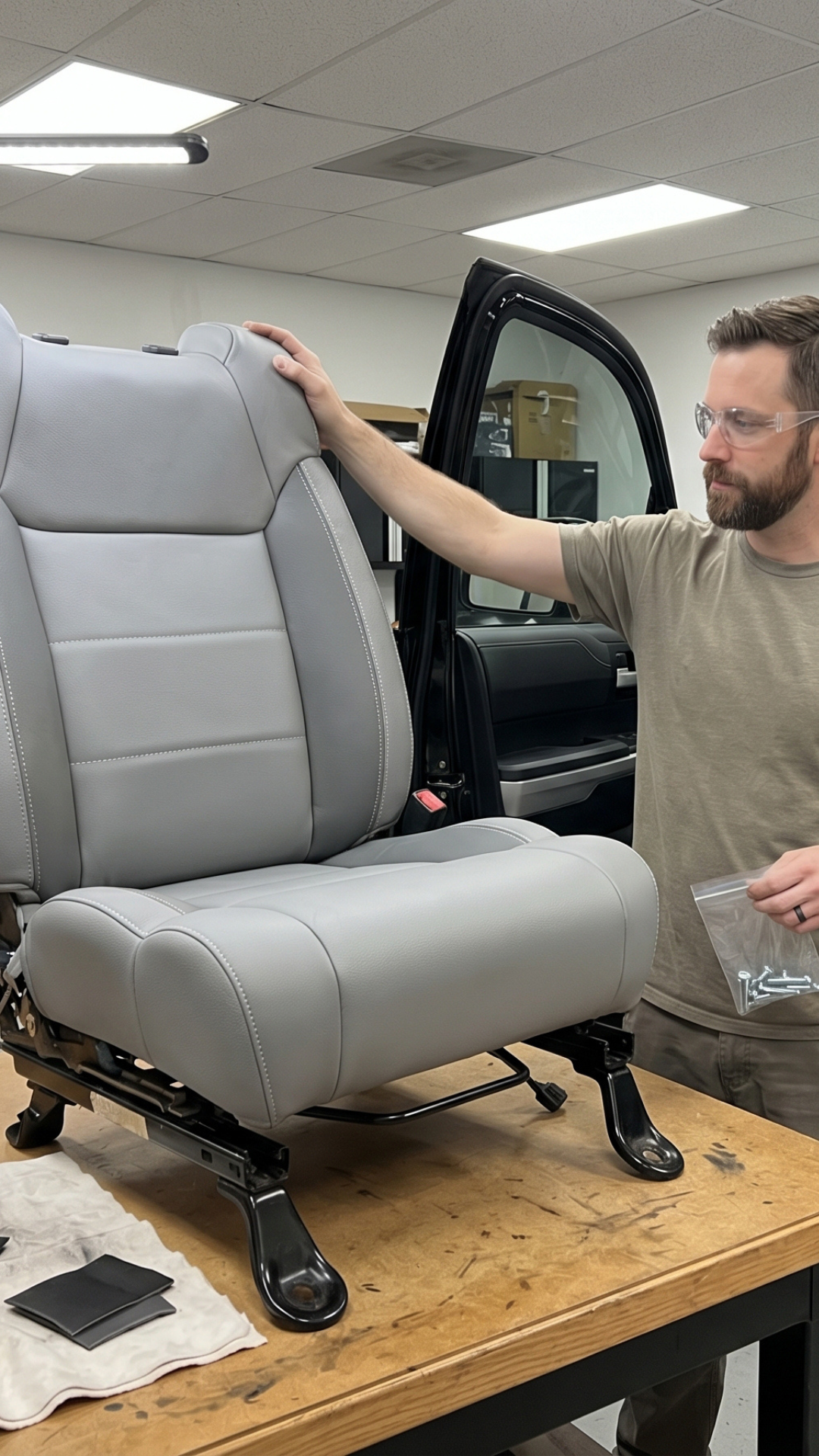
The Tundra Seat Covers We Carry And What Makes Them An OEM Match
Tundras are built to last, and most of them do. But the seats wear out well before the truck does. Once the interior starts looking rough while everything else is still running fine, that's when guys start looking for a real fix! Not a slip-on cover, but something that actually matches what Toyota put in that truck. The Seat Shop carries OEM-matched replacement seat covers for the Tundra across its full model range, patterned to the exact year and submodel of your vehicle.
We Carry Replacement Covers For Every Tundra Trim And Generation
Our Tundra replacement covers are available in leather, vinyl, and cloth, so they match whatever your truck originally came with. We get our leather, vinyl, and cloth from the same suppliers Toyota used when your truck was built. Same source, same grade, so the replacement matches the original in texture and color, not just in photos but in person. We break down what to look for in our guide on Best Seat Covers for Toyota Tundra.
Every Pattern Starts With A Digital Scan Of The Original OEM Upholstery
We digitally scan factory original Tundra seat covers piece by piece to capture the exact dimensions, seam lines, panel shapes, and contours of the original upholstery. That scan drives the cutting process and becomes the foundation for every cover we produce. Each cover is hand-sewn at our facility in Plano, Texas, in-house, not outsourced, which is how we maintain consistency across every order.
Our Covers Are Airbag Certified And Compatible With Tundra Seat Functions
Before any airbag-equipped replacement cover leaves our facility, it goes through certified deployment testing at a qualified facility. Our covers are also built with the correct backing materials and perforations to preserve your Tundra's seat heating and cooling functions exactly as they operated with the original upholstery. No modifications to your seat are required after installation.
Every Cover Ships With A Two-Year Manufacturer's Warranty
We back every replacement cover with a two-year manufacturer's warranty because we stand behind what we make. If something is not right within that period, we take care of it, giving Tundra owners a clear answer to what happens if a problem develops after the install.
What We Keep Seeing Walk Through The Door From Tundra Owners
After years of working with Tundra owners, we keep seeing the same situations come through. These aren't rare cases — they're the most common reasons guys end up calling us.
Owners Who Tried A Generic Cover And Came Back
The most common thing we hear is from an owner who tried a cheap cover first. Same story every time: it shifted around constantly, the color was off, and it never sat right on the seat. Looked fine in the listing, but it felt wrong from day one. Generic covers are built for a broad range of trucks, not the specific contours of a Tundra seat. The result is a cover that bunches at the bolsters and reads as aftermarket from the moment it's installed. We cover why that gap exists in our guide on OEM vs Aftermarket Seat Covers.
Owners Who Waited Longer Than They Should Have
A lot of Tundra owners let it go too long. What starts as a small crack in the bolster turns into a split, the foam underneath gets exposed, and once it starts absorbing UV and moisture, it breaks down fast. By the time they call us, what could've been a straightforward cover replacement is now a bigger job. If the crack is fresh and the foam still feels solid, that's the right time to fix it. Replacing the cover while the foam is still intact is a shorter, cleaner job. Once the foam deteriorates, the seat loses its structural support, regardless of the covers.
High-Mileage Owners With First And Second Gen Trucks
A consistent group comes in with requests for 2010 Toyota Tundra seat covers, trucks from that era with driver's seat bottoms cracked through the leather along the bolsters and thigh areas. Those are the spots that take the most abuse getting in and out — especially on a truck that's been used the way a Tundra is supposed to be used. On a high-mileage work truck, those areas go fast. Put a replacement from a different supply chain on there, and the difference is obvious from the first day it's on.
Current-Gen Owners Who Assume Covers Transfer Between Generations
The third-generation Tundra launched for 2022 with a fully redesigned interior, new seat profiles, updated attachment configurations, and different material specifications than the prior generation. Owners of these trucks sometimes assume a cover designed for a 2018 or 2019 Tundra will fit their current model. It will not. The seat geometry and hardware changed enough that only a cover built for the third-gen architecture will install correctly.
Why Tundra Owners Get Better Results With An OEM-Matched Replacement
Tundra owners who have gone through more than one seat cover solution tend to arrive at the same conclusion: the material and fit quality of what they ordered the first time did not match what their truck originally came with. Here is why an OEM-matched replacement specifically produces a better outcome for a Tundra.
- Patterns Built Per Year: Our covers are built from digital scans of the original OEM upholstery for each specific Tundra year and submodel, so the seam placement, panel contours, and attachment points align with your actual seat rather than a generalized truck template.
- OEM Grade Performs Longer: Automotive-grade top-grain cowhide leather and OEM-grade vinyl sourced from Toyota's supply chain hold up under the compression cycles, UV exposure, and temperature variations of daily vehicle use in ways that lower-grade alternatives do not over time.
- Airbag Safety Needs Testing: A replacement cover on a Tundra with side-seat airbags must be certified for proper deployment. Covers that skip that testing introduce a real safety variable that OEM-matched replacements with certified testing eliminate before the cover ever ships.
- Climate Functions Stay Intact: A cover built with the correct backing materials and perforation layout preserves your Tundra's seat heating and cooling performance after installation. Generic covers lacking those specifications gradually degrade the climate seat's performance as the material compresses and blocks airflow.
- Attachment Points Are Generation-Specific: The anchor hardware, hog ring locations, and clip positions on a Tundra seat changed across generations. A cover built with the correct attachment configuration for your generation installs cleanly and holds position without shifting, pulling, or separating over time.
These aren't features we put on a spec sheet to fill space. They're the actual reasons an OEM-matched replacement holds up where cheaper options don't.
How To Find The Right Seat Cover For Your Tundra Year And Trim
The Tundra has gone through three generations, and within each one, there's a lot of variation — trim levels, cab configs, seat options. Knowing your model year is a start, but it's not enough on its own. Here's how to make sure you're ordering the right cover for your specific truck.
Your Generation Determines The Starting Point
First-gen Tundras ran from 2000 to 2006, second-gen from 2007 to 2021, and third-gen launched in 2022. Seat profiles, attachment hardware, and interior specifications changed meaningfully at each generation boundary. For 2014 Toyota Tundra seat covers, you are working with a second-gen pattern, distinct from the first-gen pattern that preceded it and the third-gen pattern that followed. For 2017 Toyota Tundra seat covers, the same second-gen architecture applies, but trim-specific variations still affect which cover is correct.
Trim Level Changes The Cover You Need
A Tundra SR5 and a Tundra 1794 Edition from the same model year do not necessarily use the same seat cover. Higher trims often add perforated leather, ventilated seats, and different panel configurations. The 2025 Toyota Tundra seat covers situation reflects this clearly. The current generation has multiple trim configurations with different seat specs, and the correct cover depends on your specific trim, not just the model year.
Leather And Cloth Are Built Differently And Cannot Be Swapped
We match whatever material your Tundra came with. Leather for leather, cloth for cloth. Ordering the wrong material isn't just a cosmetic issue. It changes how the cover sits against the foam, how it attaches, and whether your seat heater or cooler still works right after the install. If you are unsure what your Tundra originally had, the door jamb sticker will confirm it. Your VIN at checkout lets us verify that detail before your order ships.
What To Do If Your Configuration Is Not Showing
If you do not immediately find your year, trim, or submodel, reach out before assuming we do not carry it. Some configurations are not visible in a standard product search. If we genuinely do not carry your setup, a suggestion submission puts your vehicle on file for our R&D team to review when researching new product lines to launch.
How To Get Your Tundra Seat Covers Installed And Looking Right
Once the covers arrive, you've got two straightforward options: do it yourself or hand it off. Either way, you're well supported.
Our DIY Resources Are Built Specifically For Tundra Owners
Installing a Tundra seat cover is something most owners can handle with basic tools. Disconnect the battery if your seat has airbags or climate functions, pull the seat out for better access, remove the old upholstery, and attach the new cover using the same anchor points the original used. We've got a full step-by-step walkthrough in our install guide, including what to check in the airbag zones before you wrap up. We put together a full walkthrough in our guide on How to Put On Auto Seat Covers, covering every step in sequence, including airbag zones and post-install function checks.
Our Install Locator Connects You With Qualified Local Professionals
If you would rather have the install handled by someone with experience, our Install Locator maintains a curated list of qualified professionals across the country. These shops know how to work with OEM-matched replacement covers and deliver a factory-level result. Finding a nearby installer takes a few minutes and yields a cover that fits correctly on the first attempt.
What To Check After The Install Is Complete
Once it's on, run the power seat through its full range to make sure nothing's catching on the tracks. Fire up the seat heater or cooler and confirm it's working the same as before. If your Tundra has side-seat airbags, check that the breakaway seam is sitting flat and not pinched across the deployment zone — that's the one thing you don't want to overlook.
Toyota VINs often do not include data on interior trim color. We recommend contacting us directly if you are unsure which color option matches your original upholstery.
Yes. We offer individual seat position covers for the Tundra so you can replace only the specific piece showing wear without ordering a full set.
Most orders ship within a few business days. If you provide your VIN at checkout, we verify your configuration first, which may add a brief review step.
Availability depends on the specific year and configuration. We recommend checking your model year on our Toyota page or contacting us to confirm what patterns we carry for that trim.
Our covers follow the original seat contours and foam structure exactly. If your lumbar function feels different after installation, the cover may need minor repositioning at the attachment points.
We carry covers for select rear configurations depending on year and cab style. Check your specific model year listing or contact us to confirm rear seat availability.