
Exact Fit OEM Leather Seat Covers
At The Seat Shop, we specialize in exact-fit OEM leather seat covers that replace your factory upholstery. Our covers match the original design, material, and color of your seats, so your interior looks factory-new again. There is no awkward slipping or cheap-looking material—just a perfect fit and a high-quality restoration that brings back the comfort and style of your vehicle’s seats.
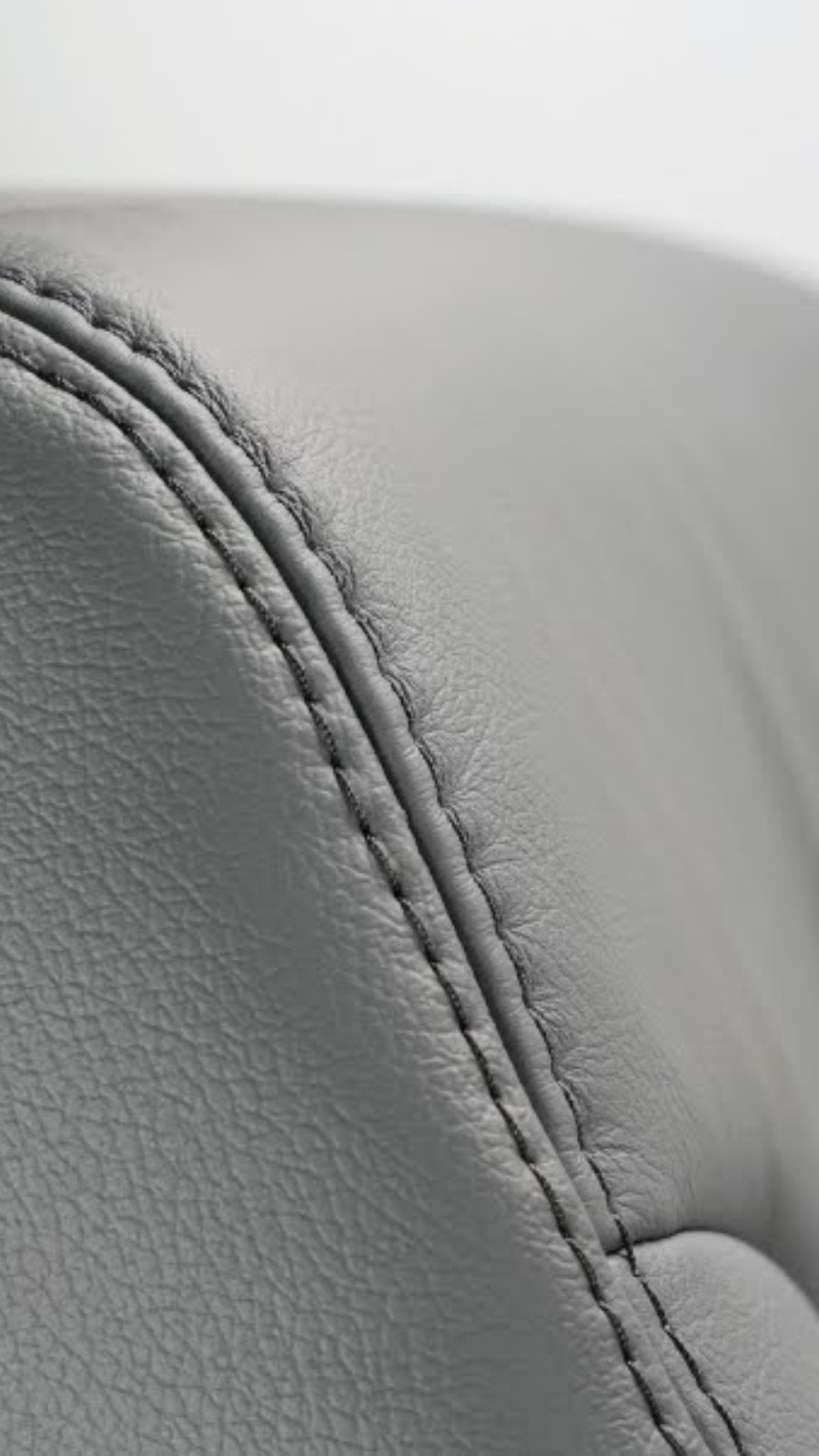
Step-By-Step Guide To Installing Your New Leather Seat Covers
Replacing your vehicle’s leather seat covers takes effort, but the results are worth it. Follow this guide to remove your old covers and install your new ones correctly:
Step 1: Remove The Seat From The Vehicle
Start by disconnecting the vehicle’s battery, especially if your seat has power adjustments or airbags. This prevents electrical issues during the process.
Next, unbolt the seat from the floor using a socket wrench. Most vehicles have four bolts securing each seat in place. Once the bolts are removed, carefully tilt the seat back and unplug any wiring harnesses underneath. Lift the seat out of the vehicle and place it on a clean work surface.
Step 2: Remove The Old Seat Cover
Turn the seat upside down to access the bottom portion. Most covers are attached using a combination of hog rings, plastic clips, Velcro, or zippers. Identify the fastening method used on your seat.
If the cover is secured with hog rings, use pliers to remove them individually. If plastic clips or Velcro hold the cover in place, gently detach them with a trim removal tool. Once all fasteners are removed, carefully peel the old cover off the seat cushion. Take your time to avoid damaging the seat’s foam padding.
Step 3: Install The New Leather Seat Cover
Align the new cover with the seat frame and foam, ensuring all seams and cutouts match correctly. Begin securing the cover using the same fastening method as the original.
Once the cover is attached, work the leather into position to ensure a smooth, wrinkle-free fit. Use a heat gun or hair dryer on low heat to soften the leather and help it conform to the seat’s shape.
Step 4: Reinstall The Seat In Your Vehicle
Before placing the seat back in the vehicle, reconnect any wiring harnesses for power controls, heating, or airbags. Once everything is plugged in, position the seat correctly and bolt it back into place. Use a socket wrench to tighten the bolts securely.
Reconnect the battery and test all seat functions to ensure everything operates as it should. Check for any final adjustments and smooth out any wrinkles in the leather.
Final Fit And Finish
Look over the seat to confirm that the new cover is installed securely. Ensure all seams are properly aligned, fasteners are tightly secured, and there are no wrinkles or loose areas. If any wrinkles remain, gently apply heat to help the leather settle.
Why Exact Fit Matters For Leather Seat Covers
A poorly fitting seat cover does more harm than good. If it’s too loose, it bunches up, shifts around, and looks sloppy. If it’s too tight, it may not install correctly or could wear out faster due to added stress on the seams.
That’s why leather seat covers with exact fit are the best choice. Unlike generic options, these covers are designed to match your vehicle’s original upholstery in every detail. Here’s why an exact fit makes all the difference:
Better Comfort And Support
Exact-fit leather seat covers are designed to match your vehicle’s original upholstery down to the stitching and contours. This precise fit ensures the cover stays in place, providing the same support and feel as the factory seats. With the right fit, you won’t have to deal with wrinkles, slipping, or uneven surfaces that make driving uncomfortable.
Easier Installation
Beyond looks and comfort, an exact fit also means easier installation. Universal covers require stretching, tucking, and constant adjustments to make them work. Exact fit replacements, like the ones we provide at The Seat Shop, are designed specifically for your vehicle’s make and model. They align perfectly with your seat frame, foam, and trim, making installation straightforward and hassle-free.
A Factory-Fresh Look That Lasts
A well-fitted leather seat cover restores your interior without compromise. It gives you the clean, factory-fresh appearance you want without the problems of an ill-fitting alternative. Plus, because it fits like the original, it holds up better over time, keeping your vehicle’s interior looking great for years.
How The Seat Shop Helps Restore Your Vehicle’s Seats
We understand how frustrating it can be when your leather seats wear out. That’s why at The Seat Shop, we provide exact-fit, OEM-matched replacement leather seat covers that bring your vehicle’s interior back to its original condition – without the high dealer price tag.
Factory-Matched For A Seamless Fit
Our seat covers aren’t universal slip-ons or low-quality aftermarket alternatives. We design each cover to match your original factory upholstery to the smallest detail. We use the same materials, stitching patterns, and colors that Ford, Chevrolet, Dodge, and other manufacturers use, ensuring a seamless blend with the rest of your interior.
Handcrafted In Texas For Superior Quality
Unlike mass-produced covers that cut corners to save costs, every cover from The Seat Shop is hand-sewn and cut in Plano, Texas. We take pride in using premium materials and expert craftsmanship to ensure the highest quality. Our attention to detail means a better fit, better durability, and a more comfortable driving experience.
A Better Alternative To Dealership Replacements
OEM seat covers from the dealership can be overpriced or discontinued for older models. Our seat covers provide an affordable, high-quality alternative that restores your seats without compromising fit or materials. You get the same factory look and feel without the dealership markup.
Higher Quality Than Competitors
Many aftermarket seat cover brands use cheaper materials, incorrect color matches, and poor attachment methods, resulting in an improper fit. Our covers are designed to last, with durable leather and factory-correct mounting points that ensure a secure and professional installation.
Choosing The Right Leather Seat Cover For Your Vehicle
Selecting the correct leather seat cover is essential for achieving a factory-quality restoration. At The Seat Shop, we simplify the process by offering exact-fit seat covers tailored to your vehicle. Here’s how to ensure you get the right one:
Identify Your Vehicle’s Year, Make, And Model
Every vehicle has unique seat dimensions, stitching patterns, and materials. The first step is to confirm your vehicle's exact year, make, and model. Trim levels also play a role in seat design, so identifying whether you have an LTZ, Lariat, SLT, or another package will help narrow your options.
Check Your Seat Style And Configuration
Even within the same model, seat styles can vary. Some trucks and SUVs have bucket seats, while others have split bench seats. Pay attention to whether your seat has power adjustments or manual controls, as this affects the placement of cutouts in the leather cover. If your vehicle is equipped with side airbags, selecting a cover designed to accommodate them for safety compliance is important.
Match The Material And Color
OEM-matched leather seat covers should blend seamlessly with your vehicle’s interior. Some seats are fully covered in leather, while others combine leather with vinyl. Color accuracy is just as important, as a mismatched shade can stand out and make the interior look inconsistent. The Seat Shop uses factory-matched materials that ensure a perfect color and texture match. Stitching patterns are also replicated to maintain an authentic factory look.
Maintaining Your Leather Seat Covers For Longevity
Now that your new leather seat covers are in place, a little care will keep them looking great for years. Follow these simple steps to protect your investment:
Clean Your Seats Regularly
Dirt, body oils, and spills can break down leather over time. Routine cleaning helps preserve the material’s softness and color. Use a mild leather cleaner designed for automotive seats, and wipe the surface with a soft microfiber cloth. Avoid harsh chemicals, household cleaners, or excessive water, as they can strip the leather’s protective coating. Any spills should be cleaned immediately by blotting with a damp cloth to prevent staining.
Condition The Leather To Prevent Cracking
Leather naturally dries out over time, especially in extreme temperatures. Applying a high-quality leather conditioner every three to six months helps keep the material soft and prevents stiffness or cracking. Use a small amount and rub it in evenly to avoid a greasy or sticky finish.
Protect Against Sun Damage
Prolonged exposure to direct sunlight can cause the leather to fade and become brittle. Using a windshield sunshade reduces heat buildup inside your vehicle, while parking in shaded areas further minimizes UV exposure. Some leather conditioners also contain UV blockers that help protect against fading.
Prevent Wear And Tear From Daily Use
Regular use creates natural stress points in leather, but a few simple habits can slow down this process. Avoid sliding across the seat when getting in and out, as constant friction can wear down the leather over time. In your pockets, sharp objects like keys, pens, and tools can scratch or puncture the material.
Address Minor Damage Quickly
Small scratches and scuffs can be treated before they become more significant issues. Leather repair kits can help blend minor imperfections, while deep cuts or cracks may require professional repair. Taking care of minor damage early prevents it from worsening and helps extend the life of your seat covers.
Read Also:
Exact fit is not a marketing term. It describes a specific manufacturing approach in which every dimension of the original seat is captured and replicated in the replacement cover, so the finished product installs and looks like factory upholstery, rather than something approximated and pulled over the top. Understanding what that approach actually involves makes it easier to tell whether a cover genuinely fits this definition.
Patterned To The Original Seat
We digitally scan each OEM upholstery piece to create our seat patterns, mapping every contour, seam placement, and panel edge before production begins. That process eliminates the guesswork that hand-measured patterns introduce, ensuring the cover lands in the right place the first time rather than requiring adjustments or forcing it into position. Exact fit seat covers built this way leave no visible gaps, bunching, or misaligned seams once installed.
OEM Material Sourcing For Color And Grain Accuracy
Getting the pattern right is only half of the equation. The material also has to match. We source leather from the same tanneries and vinyl from the same manufacturers that supplied material for your vehicle when it was built. That supply chain access allows us to match the grain texture, dye tone, and surface finish of the original upholstery in a way that generic aftermarket materials simply cannot, because generic suppliers do not source from the same supply chain.
Why Exact Fit Matters More Than Most Buyers Expect
A cover that approximates the fit looks like exactly what it is: an approximation. Loose fabric along the seam lines, excess material at the bolster, or a color that reads slightly different from the surrounding door panels all signal to anyone sitting in the truck that the seat was repaired rather than restored. The goal of an exact-fit replacement is to produce a result in which no one can tell that anything was ever replaced.
The difference between our exact-fit leather seat covers and generic aftermarket options comes down to manufacturing decisions that most buyers can't see in a product listing but feel immediately once the cover is installed.
We work from the original seat specifications, not from a broad template meant to fit as many vehicles as possible. That starting point affects every downstream decision, from material sourcing to seam patterns on the finished cover.
Genuine Automotive-Grade Top-Grain Cowhide Leather
We use genuine, automotive-grade top-grain cowhide leather on the seating surface of every leather cover we produce. This is the same category of leather your vehicle's manufacturer used, not synthetic material, vegan leather, or PU leather dressed up with the word leather in the product name. Many cheap competitors use synthetic substitutes that look similar in photos but feel different immediately and degrade faster under daily use.
Reinforced Foam Backing And Structural Support
We use 1/2-inch machine-sewn foam backing behind the leather seating surface and 1/4-inch flame-laminated foam backing on the vinyl side skirting. That structure gives the cover enough body to maintain its shape during daily use, rather than collapsing against the seat foam and wrinkling at high-pressure points. Generic alternatives typically use a thinner backing that flattens quickly, creating an uneven surface within months of installation.
Correct Thread Grade And Stitching Pattern
We source the appropriate gauge thread in the matching color for each cover and stitch to the original seam pattern rather than a simplified version designed to reduce production time. Stitching that uses thinner thread or fewer passes at high-stress points fails faster at exactly the locations that take the most daily contact. This is why lower-priced covers frequently show seam separation at the bolster after regular daily use.
Compatibility with factory seat features is a construction requirement, not an optional feature. A replacement cover that interferes with heated seat function or side airbag deployment creates a problem more serious than the worn seat it was meant to fix.
Every cover we build is designed to preserve the full functionality of the seat it replaces, and that standard applies consistently regardless of trim level or vehicle.
Perforated Leather For Heating And Cooling Compatibility
Our covers are manufactured with perforated leather and 3D spacer fabric positioned to align with the heating grid and ventilation channels beneath the seat surface. This allows heated and cooled seat functions to work exactly as they did before the replacement, with no performance loss. Many generic covers use unperforated material or incorrect perforation patterns that partially block these systems, reducing function in a way the driver notices immediately on a cold morning or a hot afternoon.
Airbag-Safe Construction And Certified Testing
Before we release any airbag-equipped product, it undergoes thorough testing at a qualified facility to ensure the airbag deploys correctly. We use OEM-matching attachment methods and engineered seam patterns designed to release cleanly on deployment. This testing requirement adds to production cost, which is why generic alternatives skip it. Skipping it creates a safety risk no driver should accept in exchange for a lower price, particularly in vehicles where seat-mounted side airbags are standard.
VIN Verification Before Every Order Ships
At The Seat Shop, we run your VIN before your order ships to verify trim level, trim code, cab type, and seat style, confirming the exact configuration matches what you ordered. This step catches compatibility issues before the cover is produced rather than after it arrives at your door, which is especially important where material and construction must align precisely with your vehicle's factory specifications.
Leather seats give clear signals when they've moved past what conditioning and cleaning can address. Recognizing these signs early makes a real difference between a straightforward replacement and a more involved fix once the foam beneath the surface begins to deteriorate.
These are the specific signs that indicate replacement rather than maintenance is the right next step for your leather seats.
- Cracked Or Split Surfaces: Visible cracking along the bolster or cushion indicates the leather has dried out beyond the point where conditioning alone can restore the surface at this stage.
- Fading Or Uneven Color: Sun exposure gradually lightens leather, creating a noticeable difference against the surrounding interior trim, door panels, and steering wheel.
- Sagging Or Collapsed Cushion: A seat sitting noticeably lower than it used to signal that the foam structure beneath the cover needs addressing, alongside the surface replacement.
- Torn Or Separating Seams: A seam that has visibly pulled apart at a bolster edge or contact point exposes the foam below and accelerates further damage without intervention.
- Stiff Or Brittle Texture: Leather that feels hard rather than supple has lost the oils that maintain its flexibility, a condition that conditioning alone rarely reverses once the surface has reached this stage.
- Persistent Odor After Cleaning: Smells that remain after a thorough detail typically mean moisture has settled beneath the surface material over time, requiring a full surface replacement.
Multiple signs appearing together usually mean replacement is the more practical choice than continued maintenance. Waiting longer after several signs appear typically adds the foam cushion to the eventual fix. At that stage, pairing a new cover with one of our Durofoam replacement cushions restores both the surface and the structural support beneath it, producing a complete restoration. Addressing both surfaces at once prevents a second round of work when the cushion reaches the same point later.
Going back to the dealer for OEM seat upholstery seems like the straightforward solution, but it comes with real limitations that make our precision fit seat covers a more practical option for most truck and SUV owners replacing worn interior upholstery.
Understanding the practical differences between the two options helps you make the right call for your specific situation.
Availability For Older Vehicle Models
OEM parts for vehicles more than eight to ten years old are frequently discontinued or on extended backorder through dealers, particularly seat upholstery. We fill that gap by maintaining our own production capability for older model years rather than relying on dealer supply chains. Our Leather Seat Covers page covers available configurations across makes and models, including many vehicles where dealer parts are no longer a realistic option or are priced well beyond what the repair makes practical sense.
Cost Without Dealer Markup
Dealer seat upholstery comes with a full retail markup, which often makes the repair cost exceed the practical value of restoring the seat on an older vehicle. At The Seat Shop, we price our replacement covers to make restoration financially practical while maintaining OEM-grade material quality and construction precision. The two-year warranty we back every cover with reflects our confidence in that construction standard. It covers both materials and workmanship and applies regardless of the vehicle's make or model or the seat's trim level.
Custom Fit OEM Leather Seat Covers vs. Dealer Installation Pricing
Beyond part cost, dealer installation adds a separate labor charge that can significantly increase the total cost of restoring a single seat. Our custom-fit OEM leather seat covers are designed for DIY installation with full-length video guides that walk through the process step by step. Our Install Locator also connects you with qualified local professionals for owners who prefer professional installation without the dealer markup on labor.
Ordering the correct, exact fit leather seat covers for your vehicle starts with confirming a few specific details that directly affect whether the cover fits the way it should on the first attempt. These factors matter more than most buyers expect, and skipping any of them is the most common reason a replacement doesn't perform as expected.
Getting these details confirmed before ordering saves time, prevents mismatches, and gets your interior back to factory condition on the first attempt rather than the second.
- Confirm Your Year & Trim: Leather seat cover patterns vary by production year and trim level, even within the same model. A Laramie cover does not fit an SLT seat from the same year, even if both are the same body style.
- Identify Your Seat Type: Bucket seats, bench seats, and 60/40 configurations require different patterns. Confirm your seat type before selecting a product.
- Know Your Cab Style: Crew Cab, Extended Cab, and Regular Cab configurations affect which pieces are included in your cover set and how the rear seat portions are patterned.
- Note Special Seat Features: If your seat has integrated storage, lumbar controls, or massage functions, confirm these are accounted for in the cover pattern before ordering.
- Check Driver vs. Passenger Side: Driver- and passenger-side covers are separate products. If only one side shows significant wear, you can order that position alone without replacing the full set.
Every cover we build is specific to the exact vehicle and trim it was patterned for, which is what makes it an exact fit rather than a close approximation. That specificity is the reason the finished result looks factory-correct rather than like a repair. It's also why we offer VIN verification at checkout and carry configurations across a wide range of model years, giving owners of older vehicles the same precision access as owners of newer ones.